# GHK-Cu Copper Peptide: Uses, Properties, and Research Applications
GHK-Cu is a synthetic copper-binding peptide that has attracted considerable interest in cosmetic science, tissue research, and studies focused on skin and connective tissue. The compound is commonly described as a copper complex of glycyl-L-histidyl-L-lysine and is investigated for its potential involvement in processes associated with collagen, tissue repair, and cellular protection.
**What Is GHK-Cu?**
GHK-Cu, or copper peptide, combines the tripeptide GHK with copper ions. In research settings, it is studied because copper plays an important role in several biological processes, including the formation and maintenance of connective tissue.
The compound is generally associated with research into skin structure, collagen and elastin, tissue regeneration, inflammatory processes, and oxidative stress. These properties have made copper peptides a subject of interest in both laboratory and cosmetic research.
**Potential Role in Skin Research**
One of the most frequently discussed areas of GHK-Cu research is skin health. Collagen and elastin are important structural proteins that contribute to the firmness, elasticity, and overall appearance of the skin.
Research involving copper peptides has therefore focused on whether GHK-Cu can support pathways associated with collagen and elastin production. This has contributed to interest in its potential applications in studies of skin texture, firmness, and visible signs of aging.
**Connection With Tissue Repair**
GHK-Cu is also investigated in relation to tissue-repair mechanisms. Researchers have examined copper peptides in connection with processes involved in wound healing and regeneration.
The interest is partly related to the role of copper in biological systems. Copper is involved in enzymes and cellular pathways that contribute to connective-tissue formation and other repair processes. GHK-Cu provides a specific peptide-copper complex that can be examined in laboratory research involving these mechanisms.
**Anti-Inflammatory and Antioxidant Research**
Another area of interest is the potential relationship between GHK-Cu and inflammatory or oxidative processes. Inflammation and oxidative stress can influence cellular and tissue function, making them important subjects in biological research.
Copper peptides have consequently been investigated for possible antioxidant and anti-inflammatory activity. These findings help explain why GHK-Cu continues to receive attention in research related to skin, connective tissue, and cellular responses.
**Hair and Connective Tissue Research**
Interest in GHK-Cu is not limited to skin research. The compound is also studied in connection with hair and connective tissue.
Hair follicles and surrounding tissues depend on complex cellular interactions, while connective tissue provides structural support throughout the body. Research into copper peptides therefore considers whether GHK-Cu may influence biological pathways relevant to these areas.
It is important to distinguish laboratory research from established medical treatment. Research findings do not automatically demonstrate that a particular peptide will produce the same effects in humans.
**GHK-Cu as a Laboratory Research Compound**
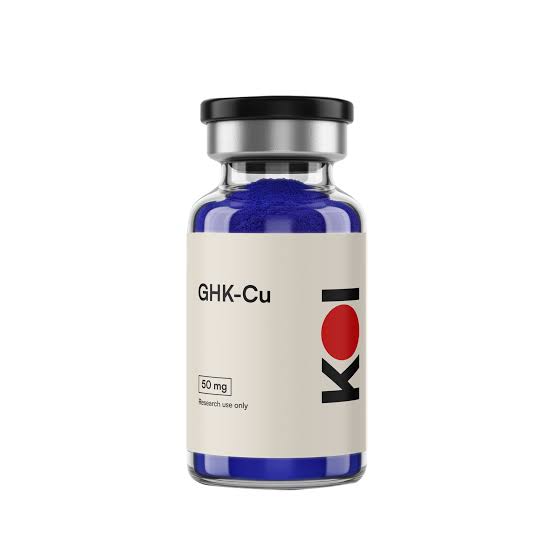
GHK-Cu is commonly supplied as a lyophilized powder for laboratory use. Lyophilization allows the material to remain in a dry form until it is prepared for a particular research application.
The product information describes a 200 mg quantity of lyophilized GHK-Cu and includes bacteriostatic water for reconstitution. The material is presented as a laboratory-grade peptide rather than as an approved medication.
Because peptide research requires controlled conditions, researchers should pay attention to factors such as purity, handling, storage, concentration, and experimental design.
**Storage and Handling Considerations**
Proper handling is particularly important for peptide materials. The product information indicates that the dry material should be kept in a cool, dry environment and protected from light.
After reconstitution, refrigeration is recommended, with a temperature range of approximately 36–46°F. Freezing should be avoided. The material should also be handled carefully to minimize contamination and preserve its stability.
These considerations are relevant to laboratory work because environmental conditions can affect the quality and stability of peptide preparations.
**Why Copper Peptides Continue to Attract Attention**
The appeal of GHK-Cu comes from the combination of peptide biology and copper-dependent processes. Rather than being studied for a single isolated effect, the compound is associated with several interconnected research areas, including extracellular matrix regulation, collagen production, tissue repair, oxidative stress, and inflammation.
This broad range of potential applications makes copper peptides particularly interesting for researchers investigating skin biology and tissue-related processes.
**A Research-Oriented Perspective**
Although GHK-Cu has been investigated in several biological contexts, research-stage compounds should not automatically be regarded as established medical therapies. Evidence from laboratory or experimental settings may differ substantially from clinical evidence in humans.
For this reason, GHK-Cu is best understood in the context of ongoing peptide and tissue research. Its potential effects, appropriate applications, and safety profile require evaluation based on the specific research setting and available scientific evidence.
**Conclusion**
GHK-Cu is a copper-binding peptide that has become an interesting subject in research involving skin, collagen, connective tissue, hair, inflammation, and cellular protection. Its biological characteristics have generated interest in how copper-peptide complexes may interact with pathways involved in tissue maintenance and repair.
As research continues, [GHK-CU 200mg ZPHC](https://www.ecbt.org/product/ghk-cu-200mg-zphc-copper-peptide/) remains a notable compound for studying the relationship between peptides, copper-dependent biological processes, and tissue function. Its research applications should, however, be distinguished from clinically established treatments, particularly when considering human use.